Listen to the animal.
Short excerpts of hydrophone recordings: humpback song, dolphin whistles, sperm-whale codas, and killer-whale calls.
Audio + recording location
Marine biodiversity has a sound of its own. This orchestra transforms real recordings from DCLDE and other waters into music for human ears, guided by measured rhythms and pitch contours. Choose your musicians on the map, or hear a finished piece.
This server has no CUDA GPU. Composing runs on the CPU and may take a while. Finished pieces are ready to play immediately.
Listen to the recorded voices and the music they helped shape.
Individual voices become musical guides, combined into one score for the composition. Coloured ticks mark source phrases. Select a point on any track to listen from there.
Their musical guides, combined on the same timeline
Real recordings enter the system. Signal analysis measures their phrases. Those measurements become a playable guide, which a generative model uses to compose music.
Short excerpts of hydrophone recordings: humpback song, dolphin whistles, sperm-whale codas, and killer-whale calls.
Onsets, durations, click groups, and pitch contours are extracted from audio. Tonal calls and clicks have different representations.
Contours become tones and clicks become mallet strikes. Each player's instrument and register are combined with your trims, timing, and arrangement.
ACE-Step 1.5 transforms the combined guide into music. A deterministic response provides a comparison that follows the measured events by construction.
The diagrams above illustrate the process. The spectrograms and phrase marks below come from the selected recording.
We selected excerpts from the DCLDE killer-whale detection and classification collection for its regional and acoustic diversity. Its authors describe it as the largest curated DCLDE audio-and-annotation dataset at the time of publication in 2025.
Read the dataset paperThese figures describe the research collection. This prototype uses a small selection of excerpts, alongside Orcasound, OpenWhistle, and Dominica Sperm Whale Project recordings, to bring different waters and species into the same composition.
Human and marine-mammal hearing differ. Registers can be shifted into a musical range, while measured event times and contour shapes remain the guide. The timing scores below test how closely the generated music follows the measured event times.
NOAA: the variety of marine mammal sounds ↗Timing scores compare musical onsets with the animal's measured onsets, against the same output shifted in time. They help distinguish a response to this phrase from music that simply sounds appropriate.
The recordings are animal sounds. The measurements are signal analysis. The guide is a human-designed mapping and the composition is generated music. This process does not decode animal meaning.
We used Claude Code and OpenAI Codex to help develop and debug the software. Livia Zaharia and Anton Kulaga define the project concept, artistic direction and methodological choices, make the final decisions, and take responsibility for the work.
Inspect the source codeMeasuring the recordings. Signal analysis extracts call timing and pitch contours. Our code maps those measurements to instruments and registers, then combines them into a playable audio guide.
Generating the music. We run ACE-Step 1.5's pretrained base checkpoint locally. Its diffusion transformer generates music from the combined audio guide and a caption. Our current pipeline leaves the model's optional language-model planning stage disabled.
Checking the response. A deterministic musical response provides a comparison, and timing scores test how closely the generated music follows the measured events. Original recordings, constructed guides and generated music remain separately playable.
Generation settings and phrase testsAdd players in the concert hall to adjust their phrases here.
In the first study, cover follows the guide's timing more closely. Lego tracks mostly ignore it.
Nothing composed in this session yet.
Visitors gather around a printed ocean map, choosing recordings with buttons beside small whale and dolphin figures. A large wall screen shows how the calls become music.
How a visit worksThe website is the working prototype. We would develop the room with scientists through a residency or other funding.
Each button adds one recording and plays a short preview of its original call. It lights while selected; press again to remove the voice. Up to six recordings can join, with the screen showing when the ensemble is full.
Press Compose on the shared touchscreen. The wall screen follows the recorded spectrogram, measured onsets and pitch contours, and generated music with one playhead. Each stage is labelled, and the musical guide is available to hear. Saved pieces play while a new one is made.
A bench with headphones offers a quieter place to compare the original calls with the music. A QR link lets visitors replay their saved piece at home and share it.
Ivory 3D prints, about 10 to 15 cm long, would have sturdy fins and broad bases. The species are recognisable by shape; a coloured ring, number and site label identify each recording. Lifting a figure leaves the music unchanged.
A matte ocean map on an oak table, roughly 2.2 × 1.2 m, stays readable in ordinary gallery light. Coastal insets separate crowded sites. The map marks recording locations; figures and buttons sit near the edges, within reach of seated visitors.
Six speakers could give the original calls and their musical guides separate positions around the room. The generated composition plays as one shared mix. Table height, circulation and sound placement would be tested in the space.
Wired buttons connect to the app through a small controller. A computer runs playback and the large display, with stereo speakers or headphones. Saved pieces need no GPU; composing new pieces live needs the engine and a GPU computer.
A multichannel audio interface would route the calls and guides to the six speakers. We would synchronise the screen with playback and measure generation times during rehearsals.
These are starting points for the ArtWaves residency. The researchers we work with would help decide which to pursue.
With Marine Acoustic Underwater Diversity, we could add recordings, check measured phrases against expert annotations, and use a shipping-noise layer to explore how calls become masked.
With Biodiversity Theory and Ecosystem Data Science, long-term recordings could shape a programme for one site, with fewer voices as a species is heard less often.
Marine Conservation and Marine Governance could inform map layers showing protected areas and shipping lanes. With the qualitative research lab, visitors' choices and comments could support a study of responses to ocean sound.
The prototype was built in three days with models that were ready to use. A residency would give us time to find a better fit for whale and dolphin recordings.
Read the current methodWe could compare bioacoustic detectors with the current onset and pitch tracking, and try other music models alongside ACE-Step 1.5 or tune them on the guides.
Musicians and scientists would help choose instruments, registers and timing. We would also extend the timing scores with researchers' measures to test how closely the music follows the calls.
The orchestra turns whale and dolphin calls into music. These studies follow the same kind of recordings into Livia's cast silver: a whistle that bends a real ring without breaking it, rings that keep moving after casting, a groove that stores a whistle, and the ideas still waiting for the workbench.
Optional, studies so far. Nothing has been cast yet. These pieces would be made only if time and funding allow, alongside the orchestra and the listening room.
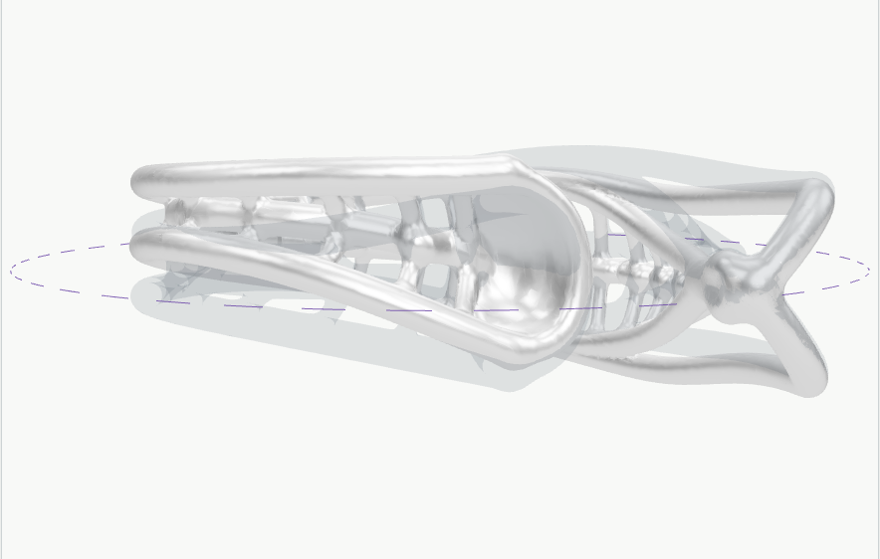
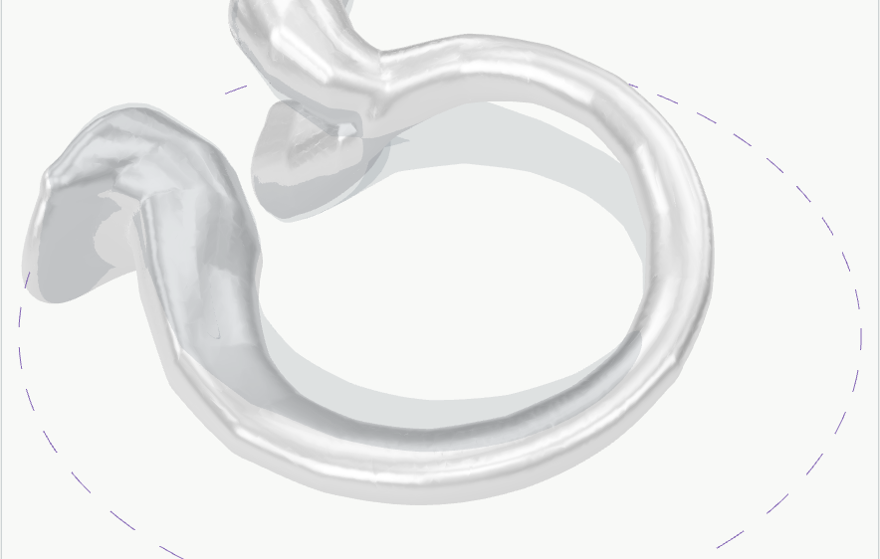
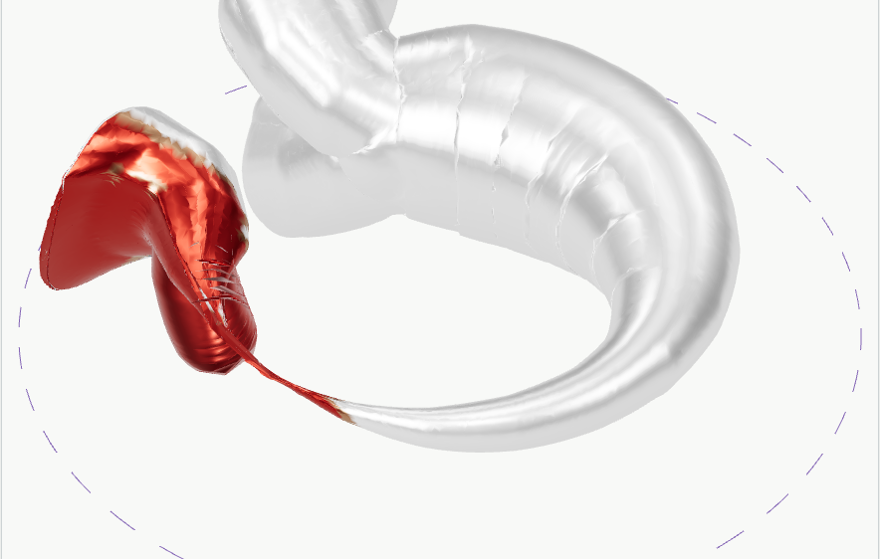
Two of Livia's stoneless rings, at full print resolution, are bent by recordings. Time runs along the metal from one end of the open ring to the other. Pitch lifts each cross-section along the finger, level swells the outer metal and pitch slope leans it.
This builds on a sound-responsive technique Livia had already explored in her Inline Ring (2022). Its Grasshopper definition is in her “sound manipulation” folder: it takes microphone level with Sound Capture and uses it to move points along a curve. Here, that approach is applied to measured whale and dolphin calls, with casting checks to keep the resulting bends workable in silver.
Every point keeps its angle around the finger and only moves outward or along it, so the ring cannot tear or pass through itself. Casting checks on the full print file then find the largest push that still casts: walls of at least 0.6 mm and openings of at least 0.4 mm, assumed lost-wax limits for the caster to confirm.
Whistles carry the change; a sperm-whale coda, all clicks, only swells the band by about 0.5 mm. Report: Sound to silver: bending a real ring.
Each study combines Livia's print-and-cast pipeline with hobby electronics, under €200 in parts per prototype. The page animates them on her real models, driven by the measured pitch and level of the whistles. The animations are schematics with simple lags, not material simulations.
| Study | Follows a whistle | Worn | Parts, roughly | Livia adds |
|---|---|---|---|---|
| Ferrofluid stones in Roots' three cups start here | Live | Yes; moves on its stand | €80–150: display ferrofluid, glass or resin domes, a 12 V electromagnet, ESP32 board, microphone | Cups for sealed domes; a stand with the coil |
| Hinged Inline with nitinol wire | At ¼–⅛ speed | Yes, with a battery | €60–120: Flexinol wire, crimps, ESP32 board, MOSFETs, small LiPo | Twelve hinged segments |
| Magnetic fins | Live | Yes; moves on its stand | €80–150: silicone, 1 mm magnets, four small coils, H-bridge, ESP32 board | Fin moulds; slots in the rail |
| Memory cells | One write per sound, then holds | Yes, no electronics | €50–120: snap domes with tiny magnets, one coil, ESP32 board | Dome seats along the band |
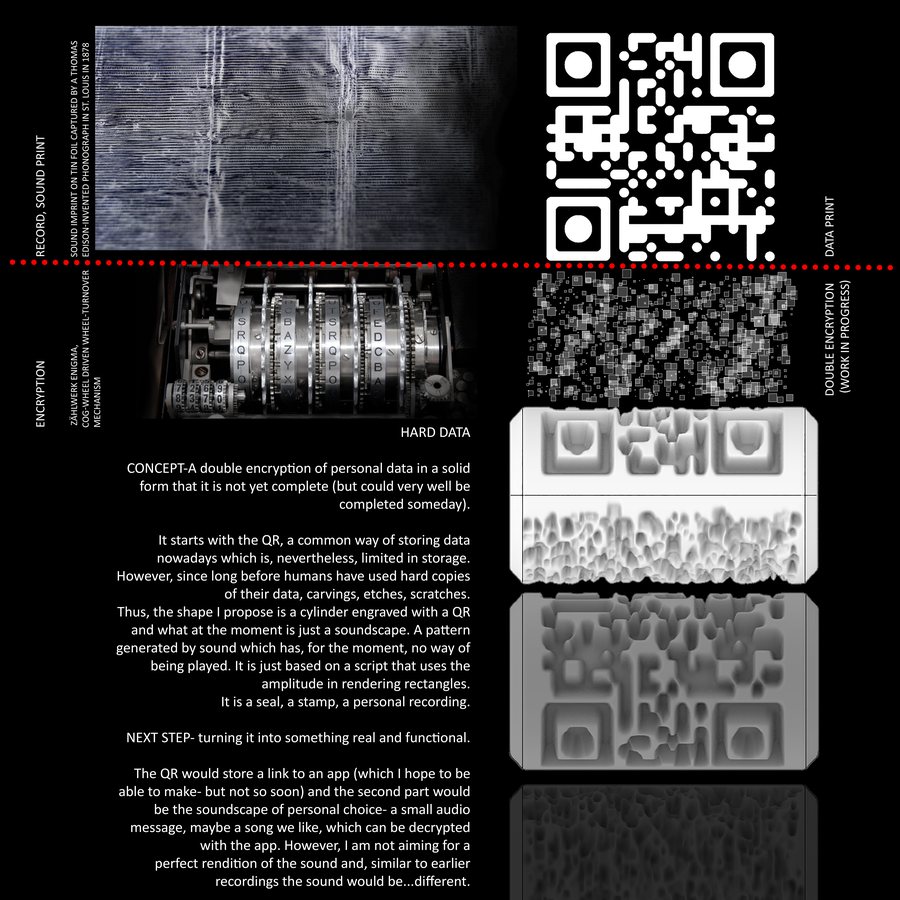
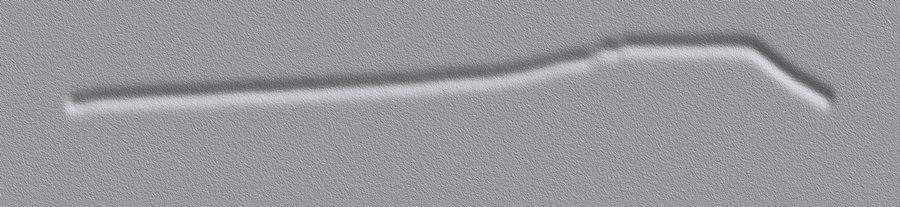
Livia's 2021 Hardata engraved a sound that could not be played back. Hardata II engraves a dolphin whistle as a contour groove around a band, then reads the groove back into sound and asks a 2026 dolphin-trained encoder whether it is still the same kind of whistle.
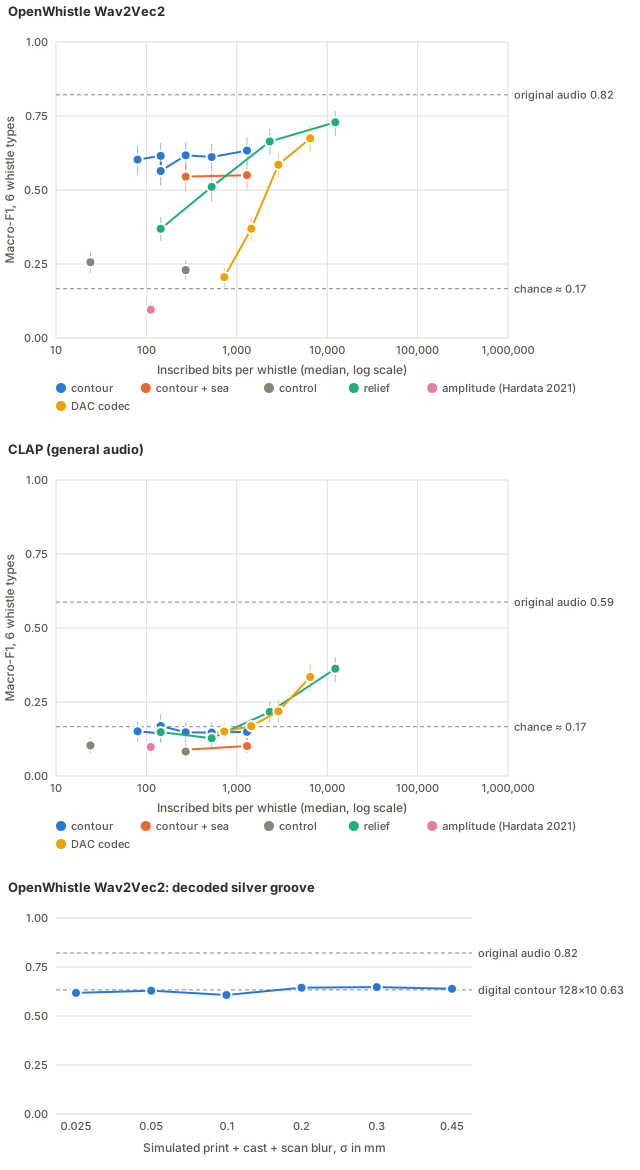
A 272-bit groove kept 75 % of the encoder's whistle-type score (macro-F1 0.62 against 0.82 on the original audio). Even 80 bits kept 60 %. The simulated casting blur is shown against the bits it costs.
Report: Hardata II pilot. Run: uv run --group art main.py inscription fetch|run|matched.
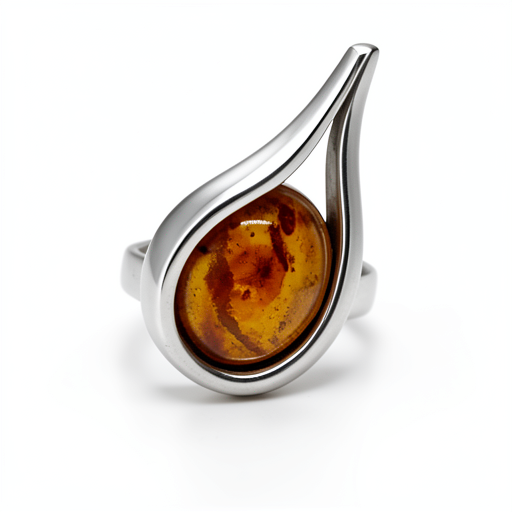
CLAP, an audio–text model, scores each recording against three descriptions and picks a silver operation: clicks give terraces, a whistle gives a sweeping crest, a wavering sound gives opening petals. FLUX.2 then redesigns a photograph of the piece. These are concept images, not fabrication models; the no-sound version shows what the image model does on its own.
Details: artistic experiments and the sound brush, where a played whistle draws strokes that grow, branch, fold or open around a stone.
Auralised sonar portraits of Livia's meshes. What does an echo reveal of a lattice, a fold or an amber?
A cast modular alphabet, if sparse encoder features turn out to match contour primitives rather than recording conditions.
One ring for 24 hours of seven dolphins, shaped by how context and hour change their whistling.
Fibre necklaces drawn by fin-whale calls as they cross a seafloor cable.
Two lattices for killer-whale voices, one grouped by population and one by recorder, to show what classifiers really learn.
Twenty-one hourglasses comparing right-whale calls with aerial counts across a season.
All eight proposals, ranked: new science-and-art projects.
Whale & Dolphin Orchestra is made by Livia Zaharia and Anton Kulaga. It began as a pre-project prototype for the HIFMB × HWK ArtWaves residency proposal, bringing marine recordings, signal analysis and generative music together with Livia's work in silver.
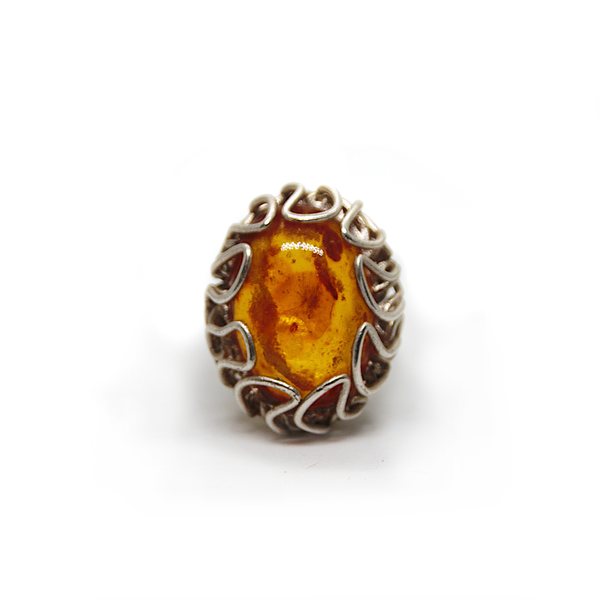
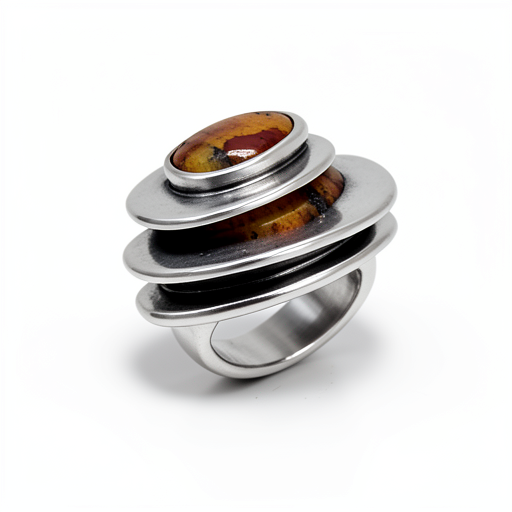
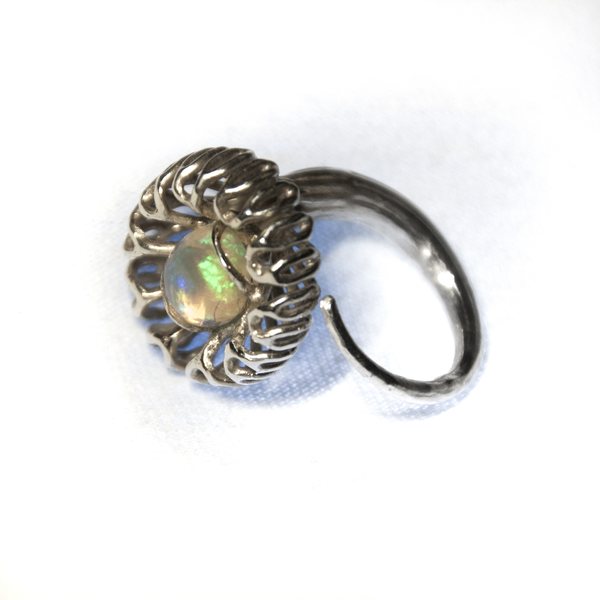
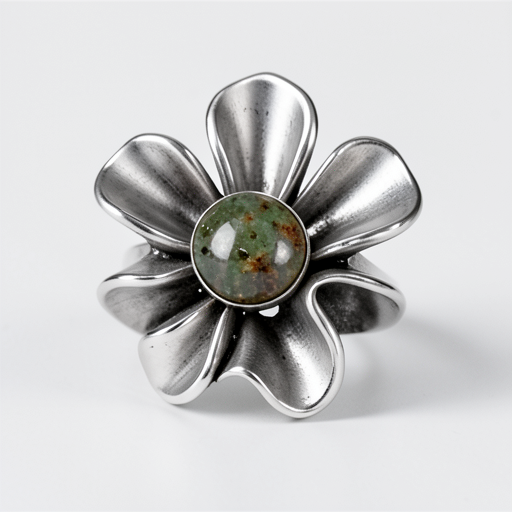
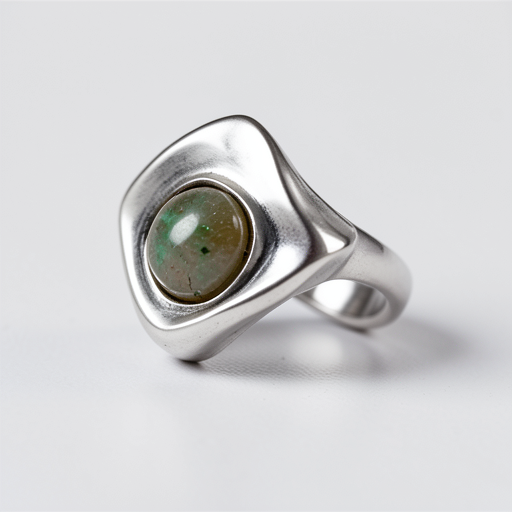
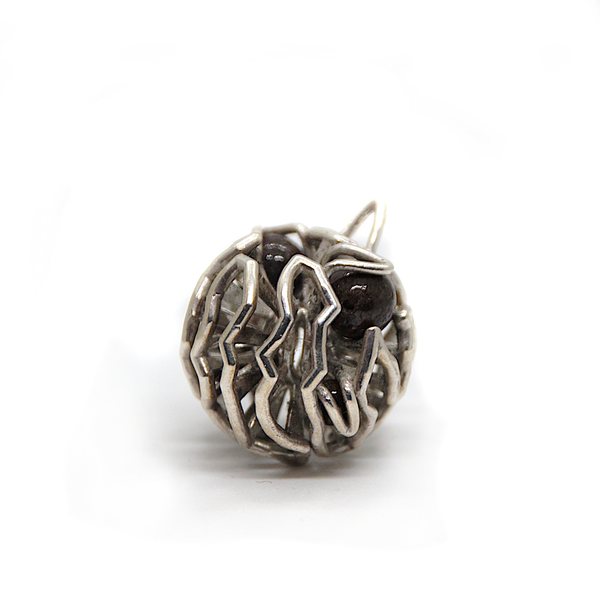
Livia is a Romanian architect and parametric jewellery artist who works under the label Paral Design. She writes the geometry of her pieces with Grasshopper, COMPAS and Python, 3D-prints them, casts them mostly in silver and combines them with natural materials such as amber, walnut husks and quartz. Her work has been shown at Romanian Jewelry Week every year since 2021.
In Livistone, her jewellery grows into buildings in a 3D town you can walk through in the browser. She founded GlucoseDAO, which builds open-source tools for glucose prediction, and contributes to the Longevity Genie ecosystem. Her rings are where the silver ideas for this project start.
Anton is a bioinformatician at the Systems Biology of Aging Group, which develops computational tools to understand ageing. For this project he built the software: the map, the analysis of the recordings, the composition pipeline around ACE-Step 1.5 and this website.
The repository holds this website, the Python engine that measures the recordings and composes the pieces, and the research behind both: datasets, models, art precedents and the silver studies.
Recordings come from Orcasound, OpenWhistle, the Dominica Sperm Whale Project and DCLDE. Photographs of Livia's jewellery and her portrait: Livia Zaharia. To talk about the project, write to Livia on Instagram or LinkedIn, or open an issue on GitHub.
See the installation plan